DONATE APPOINTMENT

TODU GUAM FOUNDATION · CARE & SERVICES

TMS

An advanced, noninvasive therapy using targeted magnetic pulses to stimulate brain networks involved in mood regulation.

Breaking Down the Acronym

Click on any card below to reveal what the letters in TMS stand for.

What is TMS?

Transcranial Magnetic Stimulation (TMS) is a noninvasive medical treatment that uses magnetic pulses to stimulate targeted areas of the brain involved in mood regulation.

How It Works

“Transcranial” means treatment acts through the skull from the outside. “Magnetic stimulation” uses controlled magnetic pulses to induce electrical activity in targeted brain regions without surgery or anesthesia.

The Goal

TMS aims to influence activity in brain networks involved in mood regulation. For some patients with depression, this may help improve symptoms, particularly when other treatments have not provided sufficient relief.

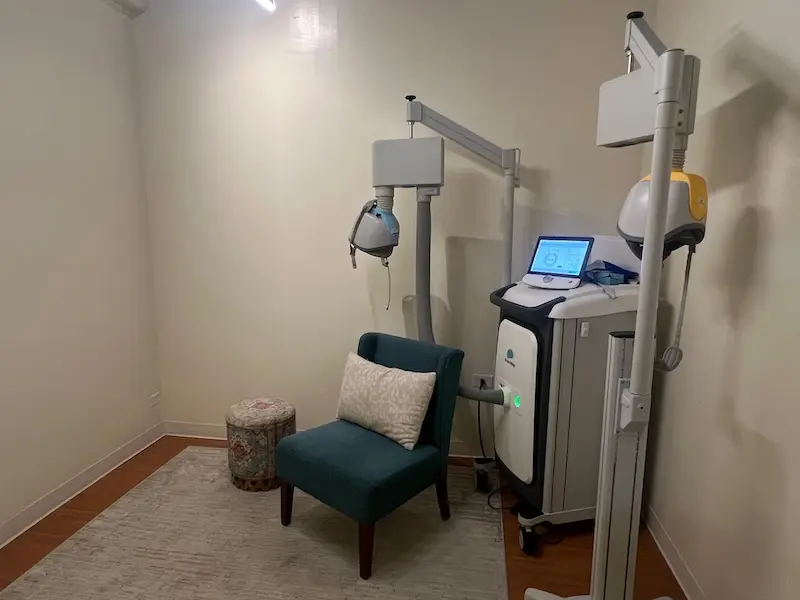
Deep TMS treatment room with BrainsWay equipment and patient chair at Todu Guam Foundation in Guam

The TMS Machine & Deep TMS

At Mind Care, we use BrainsWay technology, which provides a form of treatment known as Deep TMS utilizing a specialized helmet-like coil.

  • Comfortable Treatment Chair: During treatment, the patient sits comfortably in a chair while the device is positioned on the head.
  • No Anesthesia or Sedation: Patients remain awake throughout the session. Deep TMS does not require anesthesia or sedation.
  • Immediate Return to Routine: Patients can typically return to normal daily activities following treatment.
  • Targeted Therapy: Unlike medication that circulates throughout the body, TMS delivers magnetic stimulation to targeted regions of the brain.

DEEP TMS TECHNOLOGY

Want to learn more about BrainsWay?

Explore the advanced technology, clinical research, and scientific evidence behind the BrainsWay Deep TMS system.

Visit BrainsWay

PATIENT EVALUATION & ELIGIBILITY

Is TMS Right for You?

It is important to emphasize that Transcranial Magnetic Stimulation (TMS) is not appropriate for every person or every psychiatric condition.

Prior to initiating treatment, each patient receives a comprehensive clinical evaluation to determine whether TMS is a medically appropriate option for them and how it can be integrated into their broader, personalized behavioral health care plan.

Facts vs. Myths

Clearing up common misunderstandings about TMS therapy

MYTH

TMS and psychotherapy are the same treatment.

FACT

TMS is a medical treatment that uses magnetic stimulation. It is separate from psychotherapy, and a clinical evaluation helps determine whether it is appropriate. A treatment plan may include TMS alongside other care.

MYTH

TMS uses electrical shocks like electroconvulsive therapy (ECT).

FACT

Unlike ECT, TMS uses magnetic pulses to induce small electrical currents in targeted brain regions. It does not involve delivering electrical shocks through electrodes or require general anesthesia.

MYTH

TMS circulates medication throughout your entire body.

FACT

TMS is a noninvasive treatment that does not involve administering medication. It uses magnetic stimulation to target specific brain regions. Side effects can occur, including headache or scalp discomfort.

MYTH

TMS always requires downtime and recovery after treatment.

FACT

Most patients remain awake during TMS treatment and can return to their usual activities afterward. Recovery time is generally not required, although individual experiences and medical recommendations may vary.

Considering TMS?

Contact our Mind Care team to discuss treatment options, age eligibility, and what to expect during the evaluation process.